


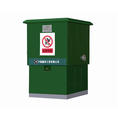

As a supplier of Outdoor Type Substation, I've witnessed firsthand how new technologies are revolutionizing the outdoor substation landscape. In this blog, I'll share some insights on how these cutting - edge advancements are improving outdoor type substations.
Smart Grid Integration
One of the most significant impacts of new technologies on outdoor type substations is the integration with smart grids. With the rise of the Internet of Things (IoT), substations can now be connected to a vast network of sensors and devices. These sensors collect real - time data on various parameters such as voltage, current, temperature, and humidity.
For example, smart meters installed in the substation can measure the electricity consumption accurately and transmit the data back to the utility company. This allows for better load management, as the utility can adjust the power supply according to the actual demand. Moreover, if there is an abnormal increase in current or a sudden drop in voltage, the system can send an alert to the maintenance team immediately. This proactive approach helps prevent power outages and reduces the time needed to restore power in case of a fault.
Advanced Monitoring and Diagnostic Tools
New technologies have brought about advanced monitoring and diagnostic tools that have transformed the way we manage outdoor type substations. Thermal imaging cameras, for instance, can detect hotspots in transformers and other equipment. These hotspots could indicate potential problems such as overloading or insulation breakdown. By identifying these issues early, we can schedule maintenance before a major failure occurs, saving both time and money.
Another great tool is the use of drones for substation inspections. Drones equipped with high - resolution cameras can quickly and safely inspect hard - to - reach areas of the substation, such as the tops of transformers and high - voltage lines. They can capture detailed images and videos, which can be analyzed by experts to detect any signs of damage or wear. This not only improves the efficiency of inspections but also enhances the safety of the inspection team.


Improved Energy Storage
Energy storage is becoming increasingly important in outdoor type substations. New battery technologies, such as lithium - ion batteries, offer high energy density and long cycle life. These batteries can store excess energy during off - peak hours and release it during peak demand periods. This helps to balance the grid and reduce the strain on the power generation system.
In addition, some outdoor substations are now integrating renewable energy sources like solar panels and wind turbines. The energy generated from these sources can be stored in the batteries and used when needed. This not only makes the substation more sustainable but also reduces the reliance on traditional fossil - fuel - based power sources.
Enhanced Automation and Control
Automation has come a long way in outdoor type substations. With the development of advanced control systems, substations can now operate with minimal human intervention. Programmable Logic Controllers (PLCs) can be used to automate various processes, such as switching operations and load shedding.
For example, in case of a power surge, the PLC can automatically disconnect non - essential loads to protect the equipment and maintain the stability of the grid. This kind of automation not only improves the reliability of the substation but also reduces the risk of human error.
Digital Twin Technology
Digital twin technology is another exciting development in the field of outdoor type substations. A digital twin is a virtual replica of the physical substation. It uses real - time data from the sensors in the actual substation to create a digital model that can be used for simulation and analysis.
Engineers can use the digital twin to test different scenarios, such as equipment failures or changes in load demand. This allows them to predict the impact of these scenarios on the substation's performance and make informed decisions about maintenance and upgrades. For example, if the digital twin shows that a particular transformer is likely to fail in the near future, the maintenance team can plan to replace it before it causes a major outage.
Modular Design and Prefabrication
New technologies have also made it possible to use modular design and prefabrication in outdoor type substations. Instead of building the substation on - site from scratch, components can be pre - manufactured in a factory and then assembled on - site. This reduces the construction time and cost significantly.
Modular substations, such as Integrated Substation and Package Transformer Substation, offer a high level of flexibility. They can be easily expanded or modified according to the changing needs of the power system. For example, if there is an increase in the load demand, additional modules can be added to the substation without disrupting the existing operation.
Conclusion
In conclusion, new technologies are bringing about a new era for outdoor type substations. From smart grid integration to digital twin technology, these advancements are improving the efficiency, reliability, and sustainability of substations. As a supplier, I'm excited to be part of this transformation.
If you're in the market for an outdoor type substation or looking to upgrade your existing one, I'd love to have a chat with you. We can discuss how these new technologies can be incorporated into your project to meet your specific needs. Feel free to reach out to start a procurement discussion.
References
- IEEE Transactions on Power Delivery
- International Journal of Electrical Power & Energy Systems
- Electric Power Research Institute (EPRI) reports