


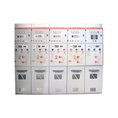


What materials are used to make a High Voltage Cable Branch Box?


Hey there! I'm a supplier of High Voltage Cable Branch Boxes, and I'm super excited to share with you the materials that go into making these essential pieces of equipment. High voltage cable branch boxes are crucial in power distribution systems, allowing for the safe and efficient branching of high voltage cables. So, let's dive right in and take a look at what they're made of.
Enclosure Materials
The enclosure of a high voltage cable branch box is like its protective shell. It needs to be strong, durable, and able to withstand various environmental conditions. One of the most commonly used materials for the enclosure is stainless steel. Stainless steel is great because it's corrosion-resistant, which means it can handle exposure to moisture, chemicals, and other elements without rusting or deteriorating. This makes it ideal for outdoor installations where the box might be exposed to rain, snow, and harsh weather.
Another popular choice is fiberglass-reinforced plastic (FRP). FRP is lightweight yet strong, and it offers excellent electrical insulation properties. It's also resistant to UV radiation, so it won't degrade when exposed to sunlight for long periods. Plus, it can be molded into different shapes and sizes, which gives manufacturers more flexibility in designing the branch box.
Some high voltage cable branch boxes also use aluminum enclosures. Aluminum is lightweight and has good thermal conductivity, which helps in dissipating heat generated inside the box. It's also relatively easy to work with, making it a cost-effective option for some applications.
Insulation Materials
Insulation is a key component in high voltage cable branch boxes. It prevents electrical current from leaking and ensures the safety of the equipment and the people working around it. One of the most widely used insulation materials is epoxy resin. Epoxy resin has excellent dielectric properties, which means it can withstand high voltages without breaking down. It's also resistant to moisture and chemicals, making it a reliable choice for insulation.
Silicone rubber is another popular insulation material. It has good flexibility and can conform to the shape of the cables and other components inside the branch box. Silicone rubber is also resistant to high temperatures and has excellent electrical insulation properties. It's often used in applications where the branch box needs to operate in high-temperature environments.
In some cases, mineral oil is used as an insulation medium. Mineral oil has good dielectric properties and can effectively cool the components inside the branch box. However, it requires proper maintenance and handling to prevent leakage and environmental contamination.
Conductive Materials
Conductive materials are used to carry electrical current within the high voltage cable branch box. Copper is one of the most commonly used conductive materials because it has high electrical conductivity and is relatively easy to work with. Copper conductors are used in the busbars, connectors, and other components of the branch box.
Aluminum is also used as a conductive material, especially in applications where weight is a concern. Aluminum is lighter than copper, but it has slightly lower electrical conductivity. However, with proper design and sizing, aluminum conductors can be used effectively in high voltage cable branch boxes.
Other Components
In addition to the enclosure, insulation, and conductive materials, high voltage cable branch boxes also contain other components such as switches, fuses, and sensors. These components are made of various materials depending on their function.
For example, switches are often made of materials such as copper, silver, or tungsten. These materials have good electrical conductivity and can withstand the high currents and voltages associated with high voltage applications. Fuses are typically made of a metal alloy that melts when the current exceeds a certain level, protecting the equipment from damage.
Sensors are used to monitor the temperature, current, and other parameters inside the branch box. They can be made of materials such as silicon, germanium, or other semiconductor materials.
Conclusion
As you can see, a high voltage cable branch box is made up of a variety of materials, each chosen for its specific properties and functions. The enclosure, insulation, conductive materials, and other components all work together to ensure the safe and efficient operation of the branch box.
If you're in the market for a high voltage cable branch box, I'd love to have a chat with you. We offer a wide range of high-quality products that are designed to meet your specific needs. Whether you need a standard branch box or a custom solution, we've got you covered.
To learn more about our products and services, you can check out our website. We also have some great resources on Triangular Ring Main Unit, High Voltage Electrical Switchgear, and AC Metal-enclosed Switchgear.
So, don't hesitate to reach out if you have any questions or if you're ready to start a procurement discussion. I'm looking forward to hearing from you!
References
- Electrical Engineering Handbook, Third Edition
- High Voltage Engineering: Theory and Practice, Second Edition
- Power System Protection and Switchgear, Second Edition