


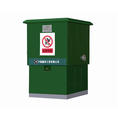
As a high voltage switchgear supplier, I've had the privilege of working closely with various types of switchgear from different manufacturers. Over the years, I've noticed several key differences that can significantly impact the performance, reliability, and cost of these critical electrical components. In this blog post, I'll delve into these differences to help you make an informed decision when choosing high voltage switchgear for your project.
Design and Construction
One of the most noticeable differences between high voltage switchgear from different manufacturers is the design and construction. Some manufacturers focus on traditional designs that have been proven over time, while others embrace innovative approaches to improve performance and efficiency.
Traditional designs often feature a robust and simple construction, with large, heavy-duty components that are built to last. These switchgear units are typically designed for high reliability and are suitable for applications where downtime is not an option. However, they can be bulky and expensive to install and maintain.
On the other hand, innovative designs incorporate advanced materials and technologies to reduce size, weight, and cost. These switchgear units often feature modular construction, which allows for easy installation and customization. They also tend to have better performance characteristics, such as lower losses and higher efficiency.
For example, Smart Ring Main Unit is a product that combines traditional reliability with modern innovation. It features a compact design, advanced monitoring and control capabilities, and a high level of safety.
Performance and Reliability
Another important difference between high voltage switchgear from different manufacturers is the performance and reliability. Performance is typically measured in terms of parameters such as breaking capacity, short-circuit current rating, and operating speed. Reliability, on the other hand, refers to the ability of the switchgear to operate consistently and without failure over an extended period of time.
Manufacturers with a reputation for high performance and reliability often invest heavily in research and development to improve their products. They use advanced testing facilities and quality control processes to ensure that their switchgear meets or exceeds industry standards.
For instance, High Voltage Electrical Switchgear is designed to provide reliable and efficient operation in a wide range of applications. It features a high breaking capacity, low losses, and a long service life.
Cost and Value
Cost is always a consideration when choosing high voltage switchgear. Different manufacturers may offer different price points, depending on factors such as the design, construction, performance, and brand reputation.
It's important to note that the cheapest option may not always be the best value. While low-cost switchgear may save you money upfront, it may also have lower performance and reliability, which could lead to higher maintenance and replacement costs in the long run.
On the other hand, high-end switchgear may offer superior performance and reliability, but it may also come with a higher price tag. When evaluating the cost and value of different switchgear options, it's important to consider the total cost of ownership, including the initial purchase price, installation costs, maintenance costs, and energy costs.
Safety Features
Safety is a top priority when it comes to high voltage switchgear. Different manufacturers may offer different safety features, such as arc flash protection, overcurrent protection, and ground fault protection.
Arc flash protection is designed to prevent serious injuries and damage in the event of an arc flash, which is a sudden release of electrical energy that can cause high temperatures, pressure waves, and flying debris. Overcurrent protection is used to prevent damage to the switchgear and other electrical equipment in the event of a short circuit or overload. Ground fault protection is used to detect and interrupt electrical faults that occur when a live conductor comes into contact with the ground.
For example, Metal Enclosed Interrupter Switchgear is designed with a high level of safety in mind. It features a metal enclosure that provides protection against arc flash and other hazards, as well as advanced protection devices that ensure reliable operation.
Technical Support and Service
Finally, it's important to consider the technical support and service offered by different manufacturers. High voltage switchgear is a complex and critical component of any electrical system, and it's important to have access to reliable technical support and service in the event of a problem.
Manufacturers with a strong reputation for technical support and service often have a team of experienced engineers and technicians who can provide prompt and effective assistance. They may also offer training programs, maintenance contracts, and other services to help ensure the reliable operation of their switchgear.
Conclusion
In conclusion, there are several key differences between high voltage switchgear from different manufacturers. These differences can impact the design, construction, performance, reliability, cost, safety, and technical support of the switchgear. When choosing high voltage switchgear for your project, it's important to carefully evaluate these differences and choose a manufacturer that offers the best combination of features, performance, and value.
If you're interested in learning more about high voltage switchgear or have any questions about our products and services, please don't hesitate to contact us. We'd be happy to discuss your specific needs and help you find the right switchgear solution for your project.


References
- Electrical Power Systems: Design and Analysis, Second Edition, by Turan Gonen
- High Voltage Engineering: Theory and Practice, Third Edition, by M. S. Naidu and V. Kamaraju
- Switchgear Handbook: A Guide to Medium-Voltage Switchgear Selection and Application, by Cooper Power Systems