


As a supplier of low tension switchgear, I've seen firsthand the importance of arc - fault protection. Arc faults can be extremely dangerous in low tension switchgear, leading to equipment damage, fires, and even endangering the lives of personnel. So, what are the arc - fault protection measures for low tension switchgear? Let's dive in.
Understanding Arc Faults in Low Tension Switchgear
Before we talk about protection measures, it's crucial to understand what arc faults are. An arc fault occurs when an electrical current deviates from its intended path, creating an electric arc. In low tension switchgear, this can be caused by various factors such as loose connections, damaged insulation, or foreign objects in the switchgear.
These arcs can generate a large amount of heat and energy, which can quickly damage the switchgear components. The high temperatures can melt metals, vaporize insulation materials, and start fires. And if the arc fault is not detected and interrupted in time, it can lead to a complete failure of the switchgear system.

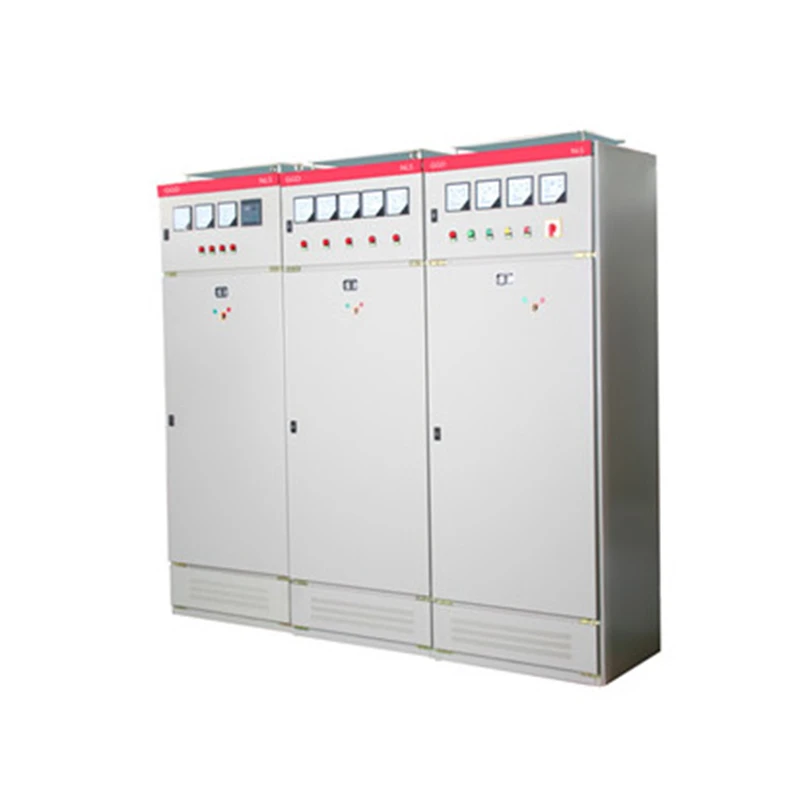
Arc - Fault Detection
The first step in arc - fault protection is detection. There are several methods to detect arc faults in low tension switchgear.
Optical Detection
Optical sensors are commonly used to detect the light emitted by an electric arc. These sensors are placed inside the switchgear compartments. When an arc occurs, the sudden burst of light is detected by the optical sensors. The advantage of optical detection is its high sensitivity. It can detect even small arcs quickly. However, it has some limitations. For example, it may be affected by ambient light, and it requires proper installation to ensure that it can cover all potential arc - generating areas.
Current and Voltage Detection
Monitoring the current and voltage in the switchgear can also help detect arc faults. An arc fault usually causes abnormal changes in current and voltage. For instance, there may be a sudden increase in current or a significant drop in voltage. By continuously monitoring these electrical parameters, any abnormal changes can be detected, indicating the possible occurrence of an arc fault.
Arc - Fault Interruption
Once an arc fault is detected, the next step is to interrupt it as quickly as possible.
Circuit Breakers
Circuit breakers are the most common devices used for arc - fault interruption. When an arc fault is detected, the circuit breaker trips, cutting off the electrical current. Modern circuit breakers are designed to operate very quickly, usually within a few milliseconds. This rapid response helps to minimize the damage caused by the arc fault.
There are different types of circuit breakers, such as thermal - magnetic circuit breakers and electronic circuit breakers. Thermal - magnetic circuit breakers use a combination of thermal and magnetic elements to trip the breaker. Electronic circuit breakers, on the other hand, use electronic sensors and control circuits to detect and interrupt the arc fault more precisely.
Arc - Fault Detection and Interruption (AFDI) Devices
AFDI devices are specifically designed for arc - fault protection. These devices combine arc - fault detection and interruption functions in one unit. They can detect arc faults more accurately and interrupt the circuit faster than traditional circuit breakers. AFDI devices are becoming more and more popular in low tension switchgear applications.
Physical Protection Measures
In addition to detection and interruption, physical protection measures are also important for arc - fault protection in low tension switchgear.
Enclosure Design
The enclosure of the low tension switchgear plays a crucial role in protecting against arc faults. A well - designed enclosure can contain the arc and prevent it from spreading to the surrounding environment. The enclosure should be made of fire - resistant and explosion - proof materials. It should also have proper ventilation to dissipate the heat generated by the arc.
Compartmentalization
Compartmentalizing the switchgear can help limit the impact of an arc fault. By separating different components and circuits into individual compartments, the arc fault is confined to a specific area. This reduces the risk of damage to other parts of the switchgear and also makes it easier to repair after an arc fault.
Maintenance and Training
Regular maintenance is essential for ensuring the effectiveness of arc - fault protection measures. The switchgear should be inspected regularly to check for loose connections, damaged insulation, and other potential arc - generating factors. Any problems should be fixed immediately.
Training is also important. The personnel who operate and maintain the low tension switchgear should be trained on arc - fault protection. They should know how to detect arc faults, how to operate the protection devices, and what to do in case of an arc - fault emergency.
Our Products and Solutions
As a low tension switchgear supplier, we offer a wide range of products and solutions for arc - fault protection. Our Electrical Lv Panel is designed with advanced arc - fault detection and interruption technologies. It provides reliable protection for your electrical systems.
Our Low Voltage AC Switchgear is also equipped with state - of - the - art arc - fault protection features. It is suitable for various industrial and commercial applications.
And our MNS Low Voltage Switchgear offers excellent arc - fault protection through its innovative design and high - quality components.
If you are looking for reliable arc - fault protection solutions for your low tension switchgear, we are here to help. Contact us for more information and let's discuss how we can meet your specific needs.
References
- Electrical Safety Standards and Guidelines.
- Technical Manuals of Low Tension Switchgear Manufacturers.
- Research Papers on Arc - Fault Protection in Electrical Systems.